2026 Top Solar Landscape Lighting Types for Global Buyers

In 2026, solar landscape lighting is becoming more practical, efficient, and design-focused for global buyers. Gardens, pathways, patios, and commercial entrances now use lighting for safety and visual character. However, product quality still varies widely. A bright product photo does not guarantee reliable performance.

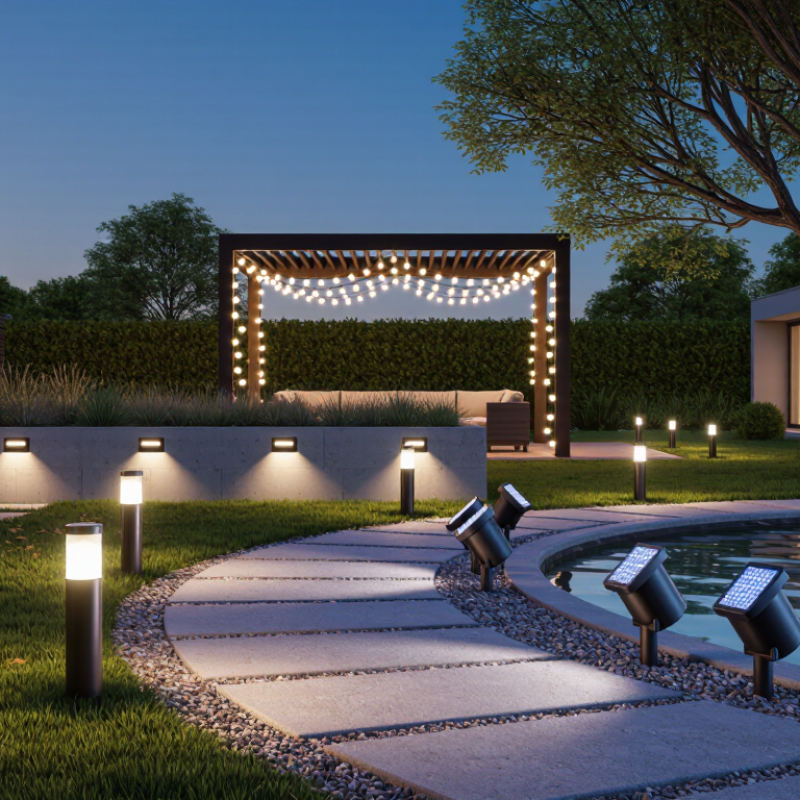
This guide examines major types, including pathway lights, spotlights, wall fixtures, string lights, bollards, and water-resistant garden lamps. Each type serves a different purpose. Pathway lights can mark a narrow walkway, while adjustable spotlights can highlight a stone wall or mature tree. Important factors include panel efficiency, battery capacity, LED brightness, lighting duration, weather resistance, installation method, and replacement-part availability. Buyers should also check regional certification expectations and supplier documentation before placing large orders.

Practical testing matters. A lamp may shine strongly at 8 p.m., then weaken before dawn after several cloudy days. That detail can affect customer satisfaction. I have found that installation location often matters as much as product specifications. Nearby branches, dust, and winter shadows can reduce charging performance. Some claims also deserve closer examination. “All-weather” does not always mean suitable for coastal salt, freezing temperatures, or heavy rainfall. This article offers a clear comparison based on product use, technical considerations, and buying experience. It also recognizes an uncomfortable truth: no single solar light fits every climate, budget, or landscape.
2026 Top Solar Landscape Lighting Types for Global Buyers

What Solar Landscape Lighting Is and How It Works

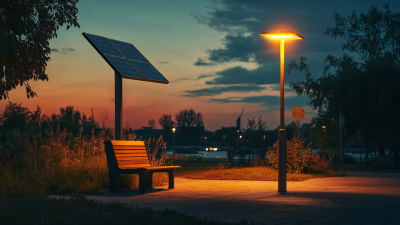
Solar landscape lighting is an outdoor lighting system powered by sunlight. It usually combines a photovoltaic panel, rechargeable battery, LED lamp, controller, and weather-resistant housing. Common types include path lights, spotlights, wall lights, step lights, and decorative string lights.

During daylight, the panel converts sunlight into electrical energy. The controller sends this energy to the battery for storage. At dusk, a light sensor activates the LED automatically. The battery then supplies power through the night. A larger panel does not always mean better performance. Battery capacity, LED efficiency, panel angle, and local weather matter just as much.

In practical installations, placement decides much of the result. A path light under a tree may receive weak charging, even in a sunny region. Dust, snow, and nearby walls can also reduce panel output. Buyers should check lumen ratings, battery chemistry, operating hours, IP protection, and temperature limits. Local latitude and seasonal daylight deserve attention. Cloudy coastal areas may need larger panels or longer charging periods.

Real performance can be less impressive than product descriptions suggest. That is worth remembering. A light rated for eight hours may last fewer hours after several cloudy days. Regularly cleaning the panel and replacing an aging battery can improve reliability. This small maintenance step is often overlooked.
Main Types of Solar Landscape Lights for Outdoor Spaces

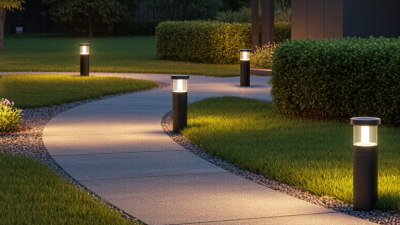
Solar landscape lighting in 2026 is less about decoration alone and more about matching each light to an outdoor task. Path lights are popular for walkways, driveways, and garden borders. Their downward glow helps define edges without creating harsh glare. Choose models with adjustable panels when nearby trees may block afternoon sunlight.

Spotlights work well for highlighting trees, statues, steps, or textured walls. A narrow beam creates a focused effect, while a wider beam covers shrubs and planting beds. For entrances and larger open areas, solar floodlights provide broader illumination. Some include motion sensors, which can conserve battery power during quiet hours. Placement matters.

Bollard lights offer stronger visual structure along paths and patios. Deck and step lights fit into railings, stairs, and retaining walls, where low-level lighting improves visibility. Wall-mounted solar lights suit fences, sheds, and exterior walls, but they need direct sunlight and a secure mounting surface. String lights add warmth to seating areas, although they usually provide atmosphere rather than practical guidance.

Buyers should check battery capacity, charging time, light output, and weather resistance together. An IP rating can indicate protection from dust and water, but installation quality still matters. In colder or shaded regions, winter performance may disappoint. That is worth testing. Light color also changes the mood: warm white feels comfortable, while cool white reveals more detail. No single type fits every garden, and combining fewer, better-placed fixtures often looks more natural than covering everything.

2026 Top Solar Landscape Lighting Types for Global Buyers

Main Types of Solar Landscape Lights for Outdoor Spaces

Typical luminous output varies by product design, solar panel size, battery capacity, LED efficiency, and operating mode. Pathway lights are designed for low-level guidance, while spotlights and floodlights provide stronger illumination for trees, walls, entrances, and larger outdoor areas. Bollard lights generally combine pathway lighting with a higher mounting position.

Key Features and Technologies in 2026 Solar Lighting

2026 Top Solar Landscape Lighting Types for Global Buyers

In 2026, solar landscape lighting is becoming more adaptable to different outdoor layouts. Pathway lights guide visitors, while spotlights highlight trees, walls, and architectural details. Bollard and step lights provide stronger visual guidance near driveways and stairs. Warm LEDs, usually between 2700K and 3000K, create a comfortable residential atmosphere. Cooler light can improve visibility in larger commercial spaces. However, brighter is not always better. Excessive glare can disturb residents, wildlife, and nearby traffic.

Key technologies now include high-efficiency LEDs, improved photovoltaic panels, and lithium-based batteries with better cycle stability. Motion sensors can raise brightness when people approach. Ambient-light sensors prevent daytime operation. Some systems also support remote monitoring through low-power wireless connections. Look for clear IP ratings, corrosion-resistant housings, replaceable batteries, and documented safety testing. These details matter more than attractive packaging.

Performance still depends heavily on installation conditions. A shaded garden may collect far less energy than a clear rooftop. Winter darkness can reduce operating hours, even with a large panel. I recommend checking solar exposure across several days before installation. Battery claims also deserve careful review. Rated capacity does not always equal usable nighttime output. In my assessment, modular designs are easier to repair, but they may cost more initially. The industry still needs better long-term data from different climates. Field results can be uneven. That limitation should remain visible to global buyers.

How to Choose Solar Landscape Lights for Different Environments

2026 Top Solar Landscape Lighting Types for Global Buyers

How to Choose Solar Landscape Lights for Different Environments

Solar landscape lights should match the site, not just the garden style. The IEA’s Renewables 2024 report expects global renewable capacity to grow by nearly 5,500 GW through 2030. Solar leads this expansion. Yet small outdoor systems still depend on local sunlight, temperature, and maintenance.

Choose monocrystalline panels for limited roof or garden exposure. They usually perform better where space is tight. In shaded courtyards, use low-lumen path lights with realistic evening expectations. Coastal areas need corrosion-resistant housings and sealed cable joints. Wet regions require at least IP65 protection. Cold climates need batteries rated for low temperatures. Snow can cover panels for days. That detail is easy to miss.

Tips: Check winter solar hours before purchasing. Compare measured lumens, not vague brightness claims. Select warm light near homes and pathways. Use neutral light for steps and security zones. A motion sensor can reduce battery stress, but it may annoy nearby residents. Think about that.

NREL’s PVWatts research tools show how location and seasonal irradiance affect solar output. Apply the same principle to landscape lighting. A southern-facing panel may outperform a larger panel under tree shade. The U.S. Department of Energy also reports that LEDs use far less energy than incandescent lighting, supporting longer nighttime operation. Still, battery quality varies widely. Ask for cycle-life data, charging temperature limits, and replacement availability. Cheap units can become expensive after one wet season.

Global Buying Factors: Quality, Safety, Standards, and Cost

For 2026, global buyers are comparing path lights, bollards, spotlights, and wall-mounted solar fixtures. Quality begins with measurable performance, not bright packaging claims. Check lumen output, solar charging time, battery capacity, and nighttime runtime under cloudy conditions. A light rated for twelve hours may deliver less after winter exposure or repeated rain.

Safety needs practical inspection. Look for strong housings, sealed cable entries, stable ground stakes, and reliable overcharge protection. IP ratings help assess water and dust resistance, but installation still matters. Confirm whether the product matches relevant IEC requirements and the electrical rules of the destination market. Some regions may also require electromagnetic compatibility, chemical restrictions, or specific conformity markings. Documentation should be clear and traceable.

Cost is more than the purchase price. A replaceable battery, UV-resistant plastic, tempered glass, and accessible spare parts can reduce maintenance expenses. Compare shipping volume, import charges, warranty terms, and expected battery replacement intervals. I have seen inexpensive fixtures lose brightness quickly because their panels were undersized. That mistake is easy to make. A higher-priced light is not automatically better, either. Buyers should request test reports, sample units, and real outdoor trials before placing large orders. Color temperature, sensor response, and winter performance deserve attention, although they are often ignored during fast purchasing decisions.

2026 Top Solar Landscape Lighting Types for Global Buyers

Global Buying Factors: Quality, Safety, Standards, and Cost

Lighting Type Typical Application Typical Light Output Typical Runtime* Recommended Protection Battery and Charging Factors Common Safety and Compliance References Indicative FOB Cost** Key Global Buying Check
Solar Pathway Light Walkways, driveways, garden borders, and low-level orientation lighting 10–80 lumens 8–12 hours after a full charge IP44 minimum; IP65 preferred for exposed outdoor locations Replaceable rechargeable batteries improve serviceability; verify winter charging performance IEC 60598-1, IEC 60529, RoHS requirements where applicable US$3–15 per unit Check ground-spike strength, corrosion resistance, and consistent light distribution
Solar Bollard Light Residential developments, parks, resorts, pedestrian routes, and commercial landscaping 100–600 lumens 8–14 hours, depending on operating mode IP65 or higher; IK08 or higher is useful in public areas Larger battery capacity supports longer autonomy; LiFePO4 is suited to higher cycle life and warm climates IEC 60598-1, IEC 60529, applicable local electrical safety rules US$25–110 per unit Assess wind stability, anchoring, drainage, optical glare, and replacement-part availability
Solar Wall Light Entrances, garages, exterior walls, balconies, and boundary structures 100–800 lumens 6–12 hours; motion-sensor modes can extend standby duration IP44 minimum; IP65 is preferable for rain-exposed façades The solar panel needs unobstructed daylight; confirm sensor range and false-trigger performance IEC 60598-1, IEC 60529, EMC requirements, and applicable national marking rules US$8–45 per unit Verify mounting hardware, screw quality, thermal management, and battery replacement access
Solar Floodlight Large gardens, building façades, signs, yards, and broad-area security lighting 500–3,000 lumens 6–12 hours at reduced output; less at maximum output IP65 or IP66; use corrosion-resistant housing for coastal environments Separate-panel designs allow better solar positioning; verify battery thermal and overcharge protection IEC 60598-1, IEC 60529, IEC 62133-2 for applicable rechargeable battery safety evaluation US$25–140 per unit Compare real delivered lumens, beam angle, panel-cable length, and operating performance in cloudy weather
Solar Spot or Accent Light Trees, sculptures, signs, architectural details, and landscape focal points 80–500 lumens 8–12 hours IP65 recommended; IP67 may be appropriate for products exposed to temporary water immersion Adjustable heads and separate panels improve aiming and solar access; check cable sealing IEC 60598-1, IEC 60529, RoHS requirements where applicable US$10–60 per unit Check beam angle, color consistency, UV resistance, and adjustment-joint durability
Solar Step or Deck Light Stairs, decks, retaining walls, patios, and pedestrian safety edges 5–100 lumens 8–12 hours IP65 minimum; select impact-resistant construction for foot-traffic areas Low-power LEDs reduce battery demand; verify safe mounting and non-slip installation conditions IEC 60598-1, IEC 60529, applicable building and low-voltage installation requirements US$6–35 per unit Prioritize glare control, impact resistance, drainage, and secure fasteners over maximum brightness
Solar String or Festoon Light Patios, pergolas, events, balconies, cafés, and decorative landscape installations 10–300 lumens total, depending on length and LED count 6–12 hours IP44 for sheltered locations; IP65 for exposed outdoor use Confirm total string length, panel placement, connector sealing, and controller memory function IEC 60598-1, IEC 60529, battery transport documentation where applicable US$8–55 per set Check cable insulation, strain relief, hanging load limits, and water ingress at every connector
Solar Security Light with Motion Sensor Driveways, entrances, sheds, garages, perimeter areas, and residential security zones 600–2,500 lumens Several weeks of standby may be possible; typically 20–120 seconds per activation IP65 or higher; impact-resistant housing is preferred Check PIR detection angle, sensitivity, activation time, battery capacity, and panel orientation IEC 60598-1, IEC 60529, EMC requirements, and IEC 62133-2 for applicable battery designs US$15–90 per unit Request measured detection distance, lumen output, battery test data, and false-trigger results

* Runtime note: Actual operating time varies with geographic solar irradiance, season, panel orientation, battery age, temperature, LED power, and lighting mode.

** Cost note: Indicative 2026 FOB ranges in US dollars for standard, non-branded products; tooling, packaging customization, certification testing, freight, insurance, import duty, VAT, and local installation are excluded.