China has become a major production base for solar lights, serving residential, commercial, municipal, and outdoor projects worldwide. Yet supplier selection requires more than comparing catalog prices. Product quality can vary sharply between two similar-looking lamps.
Francesco La Camera, Director-General of the International Renewable Energy Agency, has said, “Renewables are the backbone of the energy transition.” His observation reflects a wider market change. Solar lights now support pathway safety, garden design, street illumination, emergency access, and off-grid development. Buyers must examine the complete system, not only the lamp’s appearance. Check photovoltaic panel efficiency, battery chemistry, lumen output, charging time, working hours, and protection ratings. A sample tested beside a warehouse entrance can reveal weak brightness or poor motion sensing within days.
This guide introduces ten China-based solar lights suppliers for global buyers. It considers manufacturing experience, product range, customization ability, quality control, export capability, certifications, and after-sales support. These factors matter when products face salt air, dust, heavy rain, or long winter nights.
The ranking is not absolute. A factory suitable for a small garden project may not fit a municipal roadway. Some suppliers present impressive specifications, but field performance can tell a different story. That gap deserves attention.
Buyers should request test reports, sample units, warranty terms, packaging details, and production photographs before placing large orders. Independent verification remains wise. No supplier should be trusted on promises alone. This overview aims to make comparison clearer, while recognizing that each project has different technical and commercial needs.
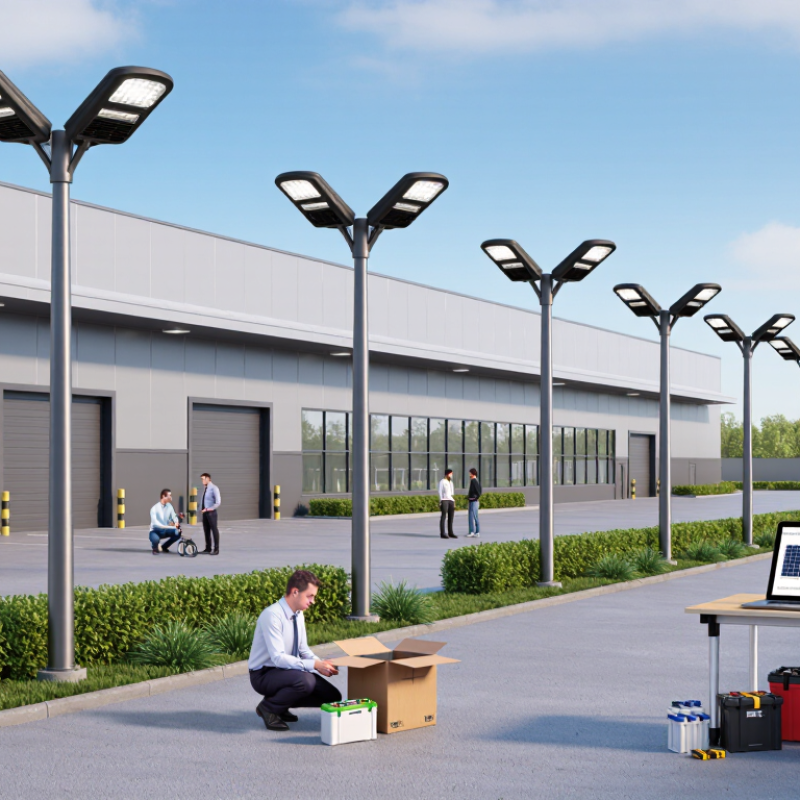
China’s solar lighting industry serves global buyers through mature manufacturing networks and flexible export services.
Many suppliers manage design, component sourcing, assembly, testing, and packaging in one production cycle. This structure helps buyers control costs and shorten development time.
Practical sourcing experience shows that product details matter more than attractive catalog images. Buyers should examine solar panel output, battery chemistry, LED efficiency, charging time, and operating hours.
A sample test under local weather conditions can reveal weak performance. Small details matter.
Suppliers can also adjust housing materials, mounting systems, light distribution, and control settings for different markets. However, customization may increase minimum order quantities and delivery time.
Reliable suppliers provide traceable specifications and consistent communication. Buyers should request photometric reports, battery safety data, ingress protection ratings, and relevant market certifications.
Documentation is not decoration. It supports customs clearance, installation planning, and long-term maintenance.
Some quotations look competitive but exclude testing, spare parts, or special packaging. That gap deserves careful review.
Production speed can also hide quality differences between batches. Clear inspection standards, approved samples, and staged payments reduce uncertainty.
Even experienced buyers should revisit their assumptions, because local sunlight, temperature, and installation height can change real-world results.
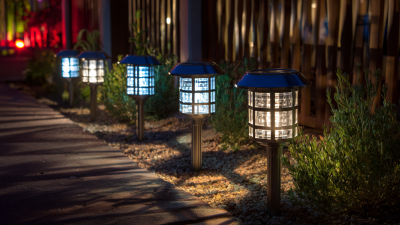
China Top 10 Solar Lights Suppliers for Global Buyers
Key Criteria for Evaluating Solar Light Suppliers in China
A reliable supplier should explain its solar light design in practical terms. Ask about panel wattage, battery chemistry, charging time, and expected nighttime runtime. Request samples from the same production line, not display units. Test them outdoors for several cloudy days. Brightness claims can look impressive on paper, yet poor optics may leave dark areas beneath a lamp.
Factory experience matters, but years alone prove little. Review production records, incoming material checks, aging tests, and final inspection procedures. Ask for recent photometric data, water-resistance test results, and battery safety documentation. An independent factory audit can reveal crowded wiring, weak seals, or inconsistent soldering. Visit the facility if the order is substantial. Photos are not enough.
Communication is another measurable criterion. A capable supplier should answer technical questions clearly and admit design limits. Check whether drawings, packaging details, spare-part plans, and warranty terms are documented. Confirm lead times, minimum order quantities, and how defective units are handled. Test the claims. I once focused too heavily on unit price and overlooked battery replacement access. That mistake increased maintenance costs later. A lower quotation may hide thinner materials or stricter payment conditions. Compare total ownership costs, not only the first invoice. Small trial orders, written specifications, and staged quality checks can expose problems before a full shipment.
This chart presents a practical 100-point evaluation framework for comparing solar light suppliers in China. Product quality, certifications, and verified solar-battery performance receive the highest suggested weighting because they have the greatest influence on product reliability, regulatory compliance, and long-term field performance. The percentages represent recommended buyer evaluation weights rather than company market shares.
China’s leading solar light suppliers stand out through focused product strengths, not identical catalogs. Some specialize in solar street lights with high-efficiency panels, lithium batteries, and adjustable mounting arms. Others produce garden lamps, floodlights, wall lights, or portable lanterns for homes and outdoor projects. During supplier evaluations, I would inspect sample wiring, battery labels, charging performance, and waterproof seals. A bright first impression can hide poor thermal control.
The strongest suppliers usually support customized housings, motion sensors, remote controls, and different color temperatures. Their factories may offer mold development, aging tests, and small trial orders. However, quality consistency can vary between production batches. One sample is not enough. Ask for test records, photometric data, battery cycle information, and clear warranty terms. Suppliers with export experience often understand packaging protection, documentation, and regional electrical requirements better. Still, buyers should verify every claim independently.
Tips: Compare samples in real outdoor conditions. Test them after cloudy days. Check illumination at ground level, not only lumens. Confirm IP ratings through reliable reports. Ask whether replacement batteries and controllers remain available. A supplier may promise excellent performance, but the installation site can expose weaknesses quickly. That is worth remembering.
China’s leading solar light suppliers usually cover several product categories. These include pathway lights, wall lamps, streetlights, floodlights, garden fixtures, and portable solar lanterns. Demand is expanding with off-grid access and outdoor infrastructure. GOGLA reported approximately 9.3 million off-grid solar products sold globally in the first half of 2024. However, product counts do not guarantee reliable field performance.
Certifications should match the destination market and product type. Buyers often request CE, RoHS, IEC 60598, and battery safety documentation. IP65 or IP66 protection helps outdoor products resist dust and heavy rain. Photobiological safety testing can support safer high-lumen floodlights. Ask for reports from accredited laboratories, not only printed certificates. A certificate is not proof of every claim.
The International Energy Agency reported that solar PV represented about three-quarters of new renewable capacity added worldwide in 2023, increasing attention on component quality and traceability.
Customization can include lumen output, color temperature, panel size, battery chemistry, motion sensors, mounting brackets, logos, packaging, and firmware settings. Suppliers may also adjust lighting schedules for winter locations or low-sun regions. I have found that battery capacity is often overstated in marketing sheets. Request measured runtime, charging data, salt-spray results, and temperature testing. Small details matter: a coastal streetlight may need sealed connectors, while a garden lamp needs discreet wiring and stable ground stakes. Manufacturers offering sample approval, production inspection, and clear warranty terms are easier to evaluate.
China’s top ten solar light suppliers should be compared through evidence, not attractive catalogs. IRENA’s Renewable Capacity Statistics 2024 recorded 346 GW of new solar capacity worldwide in 2023. That scale increases choice, but it also increases quality differences. Ask each supplier for a current factory profile, product datasheet, test reports, and export references. Verify the legal company name independently. Keep records.
For outdoor solar lights, inspect the complete bill of materials. Check panel wattage, battery chemistry, rated capacity, LED efficacy, waterproofing, and charging performance. Request samples from at least three suppliers, then test them under identical conditions. Measure brightness at dusk, runtime overnight, and recovery after cloudy weather. IEC 62257-9-5 provides useful guidance for standalone renewable-energy systems. Destination-market requirements may also include electrical safety, electromagnetic compatibility, and restricted-substance compliance. Certificates alone are not enough. Batch traceability matters.
IEA PVPS Trends 2024 reported global photovoltaic capacity above 1.6 TW by the end of 2023. Buyers should still avoid assuming that large industry growth guarantees reliable solar lights. Price comparisons can mislead when battery size or lighting claims are measured differently. Request test methods and raw results, not only summary charts. A clear purchase contract should define tolerances, packaging, spare parts, inspection rights, and corrective actions. No checklist is perfect. Heat, dust, shade, and installation angles can reduce real performance. Pilot orders reveal weaknesses earlier than large commitments.
The table below uses anonymized supplier profiles and procurement benchmarks commonly used when evaluating Chinese solar-light manufacturers. Specifications, quantities, lead times, and warranty terms should be verified through current quotations, samples, inspection reports, and signed contracts.
| Supplier Profile | Main Product Focus | Typical Solar Module | Common Battery Type | Typical Protection Rating | Typical MOQ | Estimated Production Lead Time | Typical Warranty Range | Common Certifications or Compliance Documents | Customization Capability | Best Suited For |
|---|---|---|---|---|---|---|---|---|---|---|
| Profile 01 | Integrated solar street lights | Monocrystalline silicon, approximately 18%–23% efficiency | LiFePO4 lithium battery | IP65–IP66 | 100–300 units | 25–40 days after sample approval | 3–5 years | CE RoHS IEC test reports | Housing color, LED power, lighting profiles, logo, packaging | Municipal roads, residential streets, public-area projects |
| Profile 02 | All-in-one solar street lights | Monocrystalline silicon | LiFePO4 lithium battery | IP66 | 200–500 units | 30–45 days | 3–5 years | CE RoHS EMC | Motion sensors, dimming schedules, remote-control options, carton design | Distributors seeking compact, easy-installation products |
| Profile 03 | Solar floodlights and security lights | Monocrystalline silicon | Rechargeable lithium-ion or LiFePO4 | IP65–IP67 | 300–1,000 units | 20–35 days | 2–3 years | CE RoHS UN38.3 for battery transport | Remote control, PIR sensor settings, cable length, retail packaging | Residential security, warehouses, farms, and outdoor walls |
| Profile 04 | Solar garden and landscape lights | Polycrystalline or monocrystalline silicon | Ni-MH or lithium-ion battery | IP44–IP65 | 500–2,000 units | 20–35 days | 1–2 years | CE RoHS REACH where applicable | Color, shape, decorative finish, retail box, private-label artwork | Garden centers, home-improvement retailers, and e-commerce sellers |
| Profile 05 | Solar bollard lights | Monocrystalline silicon | LiFePO4 or lithium-ion battery | IP54–IP65 | 200–800 units | 25–40 days | 2–3 years | CE RoHS Photometric data | Height, mounting base, color temperature, body finish, logo | Hotels, parks, walkways, gardens, and commercial landscaping |
| Profile 06 | Solar street-light systems with separate panels | Monocrystalline silicon, selected by system load | LiFePO4 battery cabinet or battery box | IP65–IP66 | 50–150 complete systems | 35–60 days | 3–5 years | CE IEC documents Controller test report | Panel size, battery capacity, pole design, controller logic, lighting schedule | Large infrastructure projects and off-grid applications |
| Profile 07 | Solar traffic, warning, and pathway lights | Monocrystalline silicon | Sealed lead-acid or lithium battery | IP65–IP67 | 100–500 units | 25–45 days | 2–3 years | CE RoHS Optical test data | Flashing patterns, LED color, mounting brackets, controller programming | Roadside safety, construction zones, pathways, and temporary sites |
| Profile 08 | Solar wall lights and residential outdoor fixtures | Monocrystalline silicon | Ni-MH or lithium-ion battery | IP44–IP65 | 500–2,000 units | 20–35 days | 1–3 years | CE RoHS EMC | PIR sensitivity, lighting modes, housing color, packaging, user manual | Retail, residential construction, and online distribution |
| Profile 09 | Commercial solar parking-lot lights | High-efficiency monocrystalline silicon | LiFePO4 lithium battery | IP66 | 50–200 units | 35–55 days | 3–5 years | CE RoHS IES or LM-79 data where available | Illumination distribution, pole compatibility, smart controls, battery capacity | Parking areas, logistics sites, campuses, and commercial facilities |
| Profile 10 | Smart solar lighting with remote monitoring | Monocrystalline silicon | LiFePO4 lithium battery | IP65–IP66 | 100–300 units | 40–70 days | 3–5 years | CE RoHS EMC Software documentation | LoRa, 4G, or other communication options; dashboard, sensors, and API integration | Smart-city pilots, utilities, campuses, and managed infrastructure |